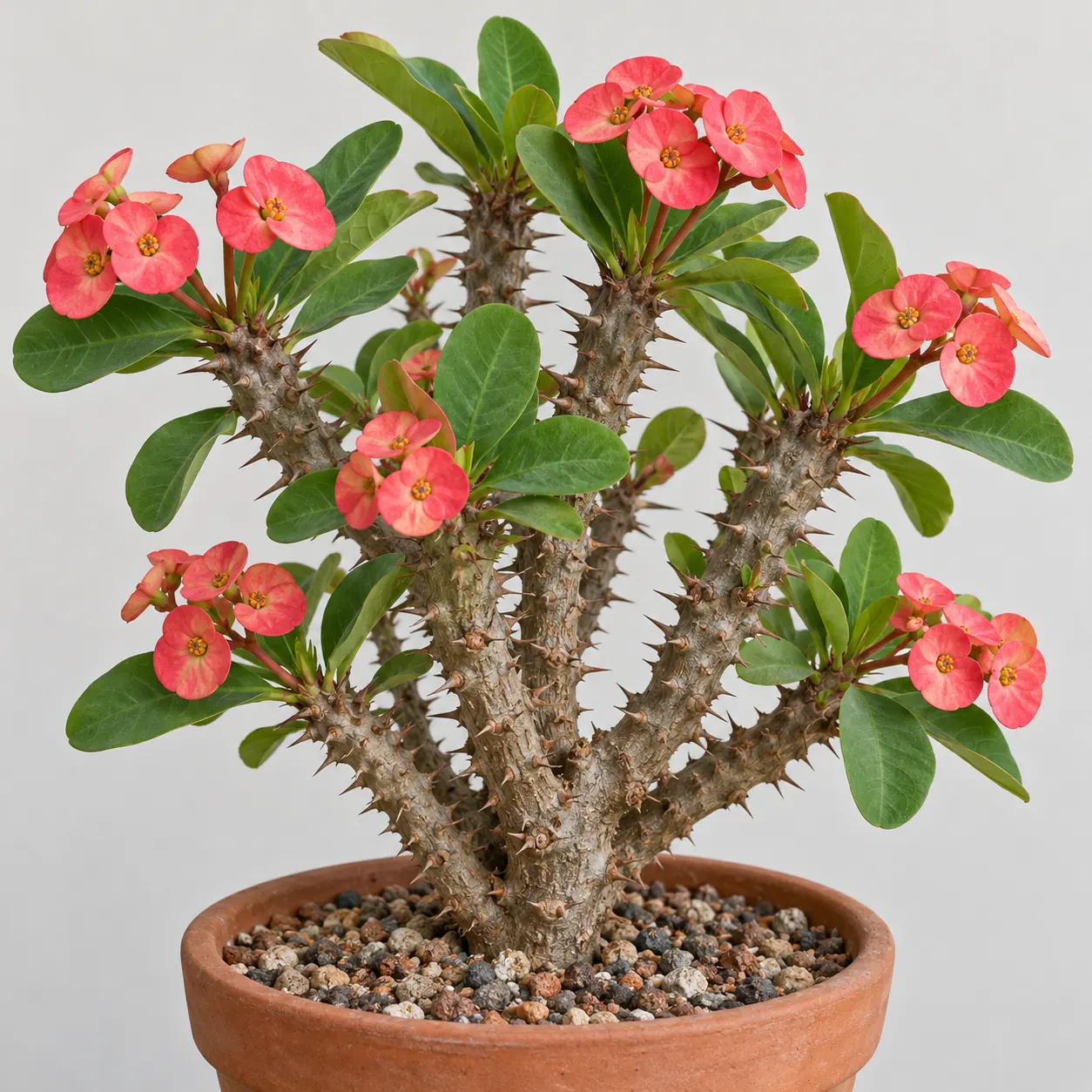
Shrubby form
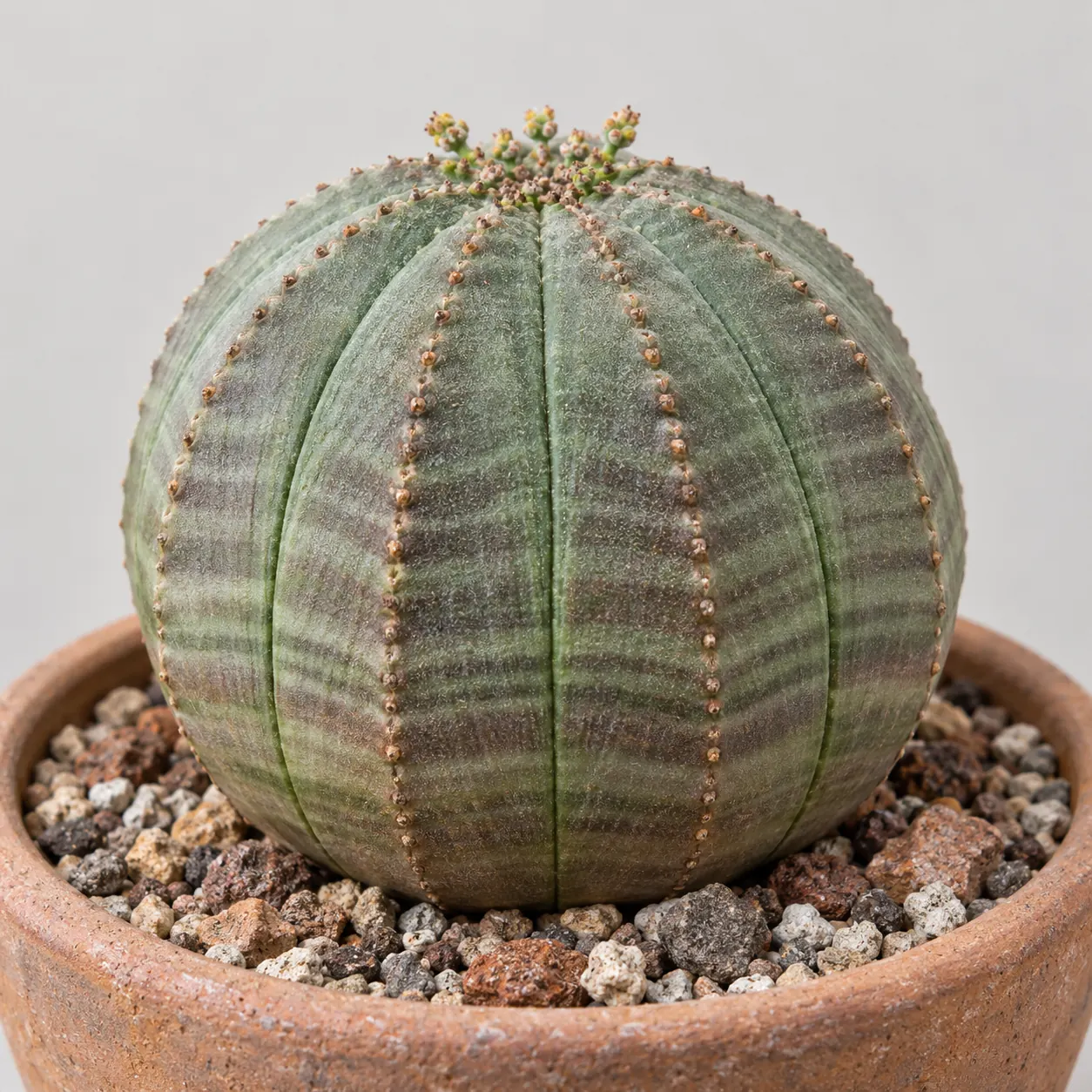
Globose form
Columnar form
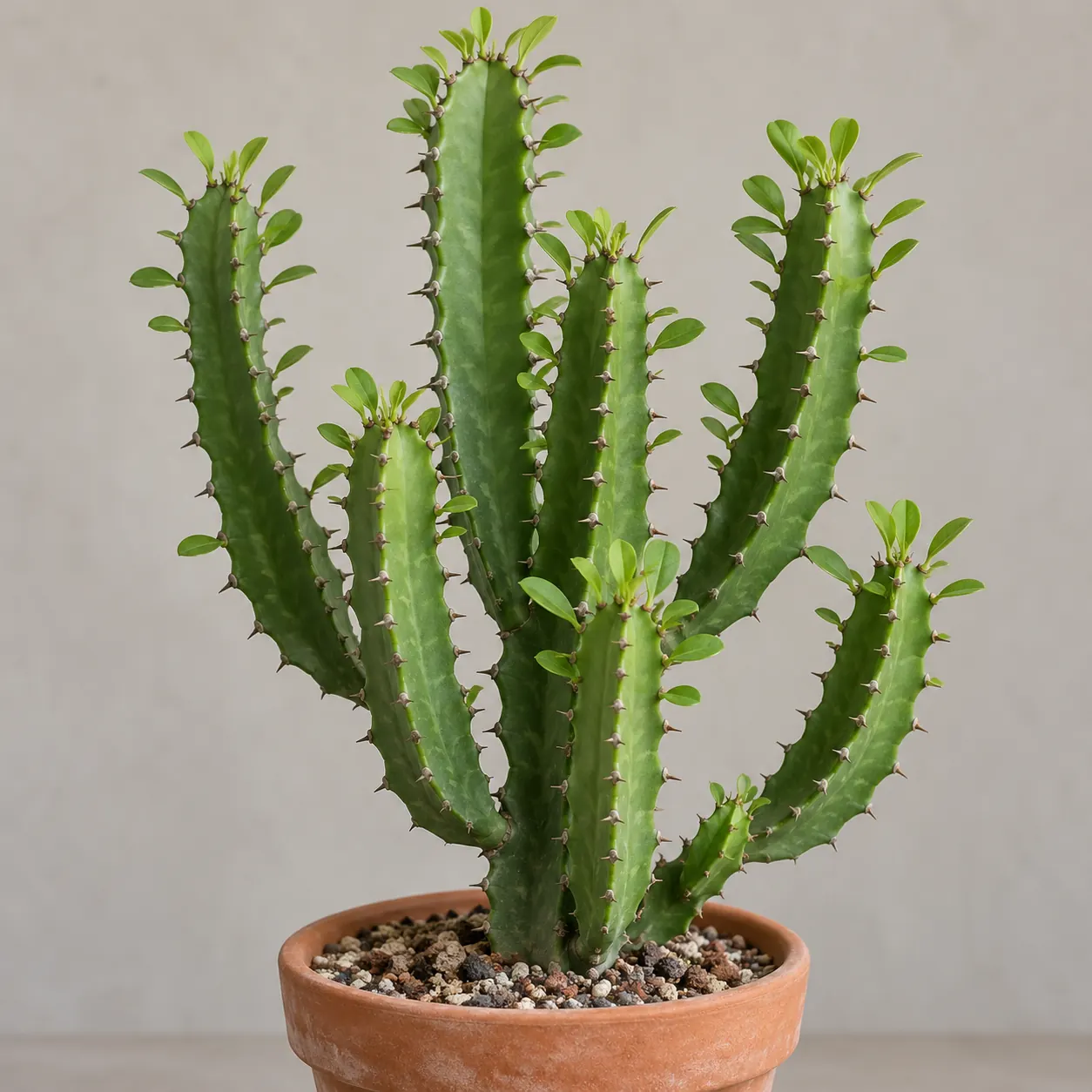
Shared structure and contrasting growth forms
Euphorbia L. belongs to the spurge family and has an almost worldwide distribution. Its characteristic structure is the cyathium, a small inflorescence in which highly reduced male flowers and a female flower share a common involucre. Glands along its rim can differ in shape and appendages. The genus includes herbs, shrubs and trees. Succulence, the storage of water in fleshy tissues, occurs within part of this diversity [2-WWW] [Lee et al. 2024].
Molecular research recognizes four subgenera, Esula, Euphorbia, Chamaesyce and Athymalus. Each formed a distinct group in the plastome analysis published by Lee and colleagues in 2024. The tree included 42 species of the genus, representing selected examples of its diversity. Detailed genome comparisons and estimates of variation used a smaller dataset of 18 accessions belonging to nine species. These two study scopes are distinct [Lee et al. 2024].
Coverage of the plastome comparison
The new sequences obtained in 2024 represented the herbaceous species Euphorbia nutans, Euphorbia humifusa and Euphorbia maculata from subgenus Chamaesyce. Six species in the nine-species comparison belonged to that group. The dataset also included Euphorbia tirucalli, Euphorbia smithii and Euphorbia pekinensis. Estimates of within-species variation were based on Chamaesyce species represented by two to four accessions. They do not automatically establish the range of variation in succulent species from other subgenera [Lee et al. 2024].
The compared plastomes ranged from 162 002 to 164 773 base pairs in length. They retained two single-copy regions separated by a pair of inverted repeats. Sequence variation was generally greater outside protein-coding regions, and repeat boundaries also differed. Before analysis, the authors checked gene descriptions in sequences downloaded from the database and corrected their annotations. Differences in reported gene counts can therefore reflect both genome features and the way a genome has been annotated [Lee et al. 2024].
DNA markers and interpreting relationships
In the 2024 study, rpoB produced the tree most similar to the whole-plastome tree among the individual regions evaluated. The authors identified it as a candidate for further systematic research. Their criterion was agreement between two reconstructions based on chloroplast DNA. This is not an independent test of the complete history of the species or a guarantee that a single gene will identify every spurge. Specimen identification, taxon sampling and nuclear data remain important parts of such a test [Lee et al. 2024].
The 2026 study by Taha and colleagues expanded these resources with the plastome of the succulent Euphorbia resinifera, obtained from spine DNA. The researchers also examined rpl22 and repeated plastome regions. These analyses emphasize that a marker’s usefulness depends on the plants compared and the research question. In this material, rpl22 had an identical sequence in E. resinifera and Euphorbia ampliphylla. Such similarity in one DNA fragment coexists with distinct, currently accepted species names [Taha et al. 2026] [2-WWW].
Related articles
Synonyms and names in the literature
Chamaesyce · Monadenium · Pedilanthus [2-WWW]
Related plant cards
Created
Last modified