Cactus anatomy and shoot organization
The succulent shoot combines water storage, photosynthesis, transport and plant support. Its structure becomes understandable when internal tissues are related to areoles, ribs and growing regions.
10 min readTissue organisation, water balance, flowering and inheritance in the context of Cactaceae diversity and evolution.
Showing 1–12 z 108 results
The succulent shoot combines water storage, photosynthesis, transport and plant support. Its structure becomes understandable when internal tissues are related to areoles, ribs and growing regions.
10 min readIn many cacti, atmospheric carbon dioxide uptake occurs mainly at night. Light is still needed during the day. CAM links these two periods through temporary carbon storage in organic acids.
9 min readThe root system combines plant anchorage, mineral uptake and water exchange with the substrate. Its function changes during drought, after rehydration and as tissues age. Root shape is only part of this system.
8 min readA cactus flower is a complex reproductive structure in which floral organs combine with tissues bearing shoot-like features. Observing successive developmental stages helps explain the origin of the inferior ovary, pericarpel and differences between species.
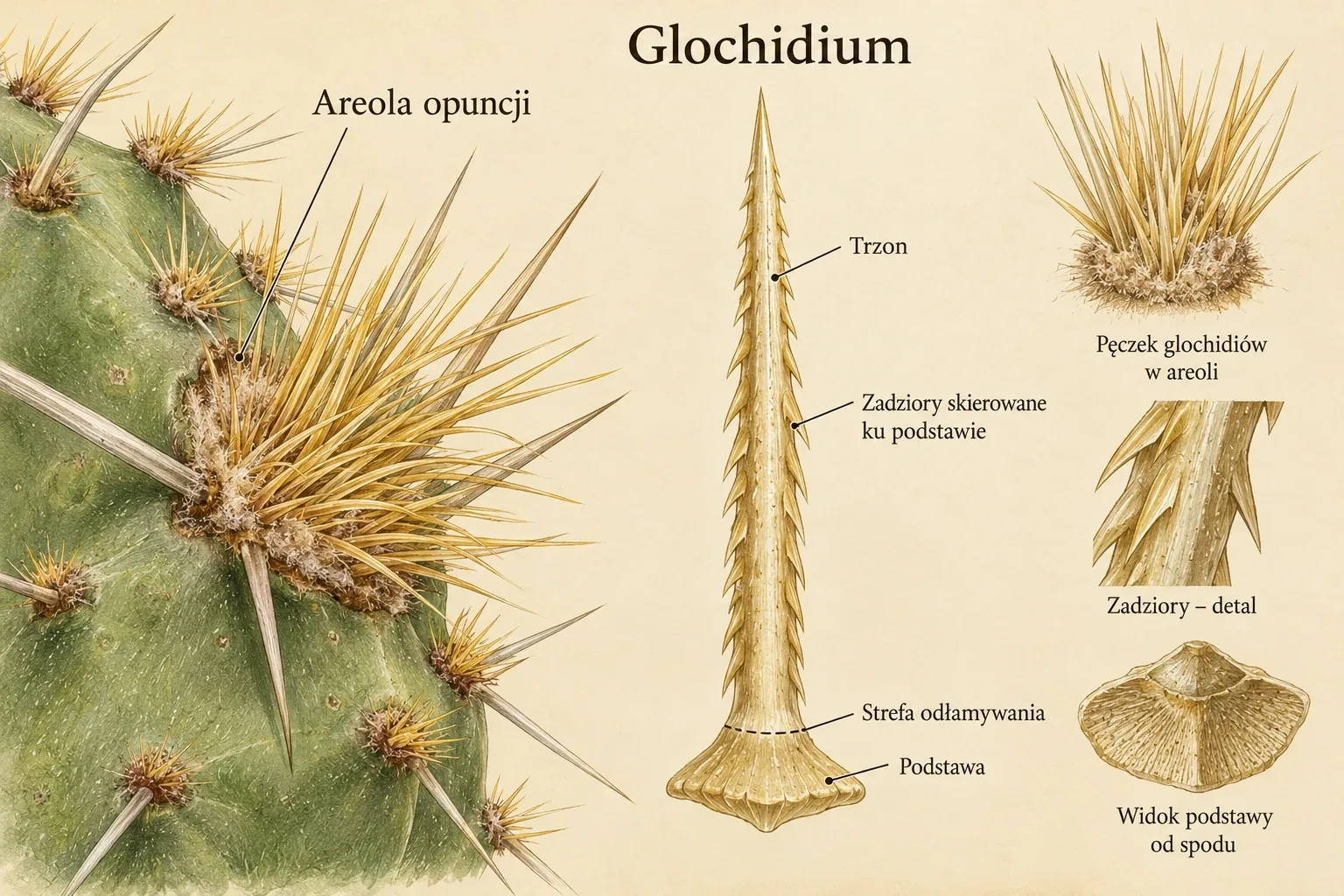
8 min readSpines and glochids arise in areoles, but their structure and functions vary. Microscopy reveals both the attachment mechanism and specialized structures involved in water movement or nectar secretion. These processes need to be considered separately.
8 min readModern cacti are terminal branches of a shared history, not a series of forms leading from leafy to globose plants. Phylogenomics distinguishes relatedness, structural similarity and the rate at which species arise.
7 min readA botanical name links a plant to a description, a nomenclatural type and a particular taxon concept. Synonyms and provenance data connect a modern card with an older label and literature.
15 min readCrossing, selection and clonal propagation use different properties of inheritance. Interpreting cactus offspring requires distinguishing genotype from appearance, a single-gene model from a complex trait, and pollination outcome from confirmed seedling parentage.
9 min readExtracellular freezing, dehydration, sugars, mucilage and hormonal signalling explain some differences between cacti. Plant provenance, organ and season also change tolerance.
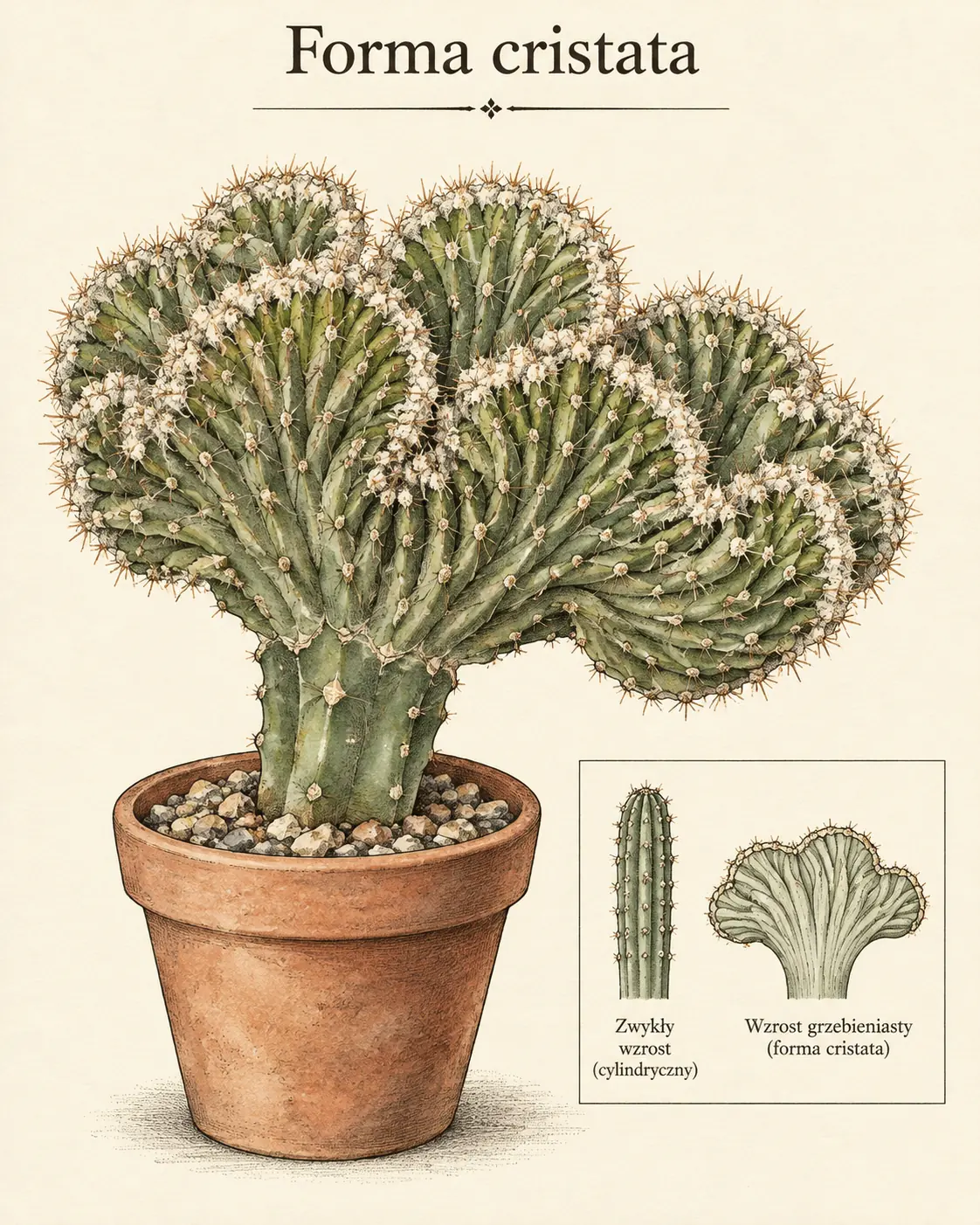
16 min readA crested or irregular shoot describes a developmental outcome. Establishing its cause requires separate evidence, including meristem observation, clone comparisons and sometimes genetic or phytopathological testing. [Mauseth 2025]
6 min readEight diagrams help compare traits, but combine different criteria. Each example must be related to the species description and distinguished from the illustration's simplification. [Britton and Rose 1923]
4 min readThe stem of Blossfeldia liliputana can shrink to a thin disc during drought. Anatomical studies and a prolonged drying experiment explain how such a small plant retains the ability to rehydrate. [Barthlott and Porembski 1996]
3 min read