Organogenesis and embryogenesis
Organogenesis produces organs, such as shoots and roots. Somatic embryogenesis creates embryonic structures from cells of the plant body. Both pathways may begin directly in organised tissue or proceed through callus, proliferating tissue developing from an explant. The pathway depends on the material, its condition and culture conditions. [Ivannikov et al. 2022][Lema-Rumińska et al. 2013]
The supplied publications describe Blossfeldia liliputana (in the title of the 2022 paper, B. liliputiana) and the horticultural monstrous form of Copiapoa humilis subsp. tenuissima (in the 2013 paper, C. tenuissima form monstruosa). These are two different biological materials and two separate experimental systems. [Ivannikov et al. 2022][Lema-Rumińska et al. 2013]
Blossfeldia shoots from seedling fragments
Ivannikov and colleagues established cultures from fragments of sterile seedlings. An MS-type mineral medium was supplemented with growth regulators, including the cytokinin BAP and auxin 2,4-D. In B. liliputana, new shoots regenerated after callus formation, through indirect organogenesis. [Ivannikov et al. 2022, methods and results]
Light mattered for tissue development. Callus did not develop in the treatments kept in darkness, while regenerating material was obtained under light. The authors conducted experiments at 22–26°C with a sixteen-hour photoperiod. These conditions define the laboratory culture stage. [Ivannikov et al. 2022]
Subsequent procedures included rooting or grafting the resulting shoots and acclimatisation. Each stage has a different assessment endpoint, from new shoot formation through root development to continued growth outside the vessel. The paper compared three species, so combined results require retaining this scope. [Ivannikov et al. 2022]
Somatic embryos in Copiapoa
Lema-Rumińska and colleagues compared embryo development in the horticultural monstrous form of C. humilis subsp. tenuissima. The material had a dark epidermis and white areoles, with spines absent. Globular-stage embryos and callus were studied, allowing direct and indirect embryogenesis to be followed. [Lema-Rumińska et al. 2013, pp. 1–2]
The media contained abscisic acid, ABA, at concentrations from 0 to 100 µM. For directly developing embryos, low concentrations up to 1 µM were more favourable, with elongation observed. At 10–100 µM, development was inhibited and turgor was lost. The unit µM means micromoles of a substance per litre. [Lema-Rumińska et al. 2013, pp. 2–5]
Regeneration through callus also compared sucrose concentrations of 1%, 3% and 5%. A higher sucrose proportion favoured an increase in embryo number and callus fresh mass in this system. ABA affected tissue proliferation and appearance, while its effect on the number and maturation of indirect embryos differed from the response of directly developing embryos. [Lema-Rumińska et al. 2013, pp. 4–6]
Tissue condition changes the response
Globular embryos, callus and regenerating shoots are at different stages of organisation. Their different responses to a growth regulator arise from differing developmental programmes and physiological states. Comparing these papers shows why propagation results are described separately for induction, growth, rooting and acclimatisation. [Ivannikov et al. 2022][Lema-Rumińska et al. 2013]
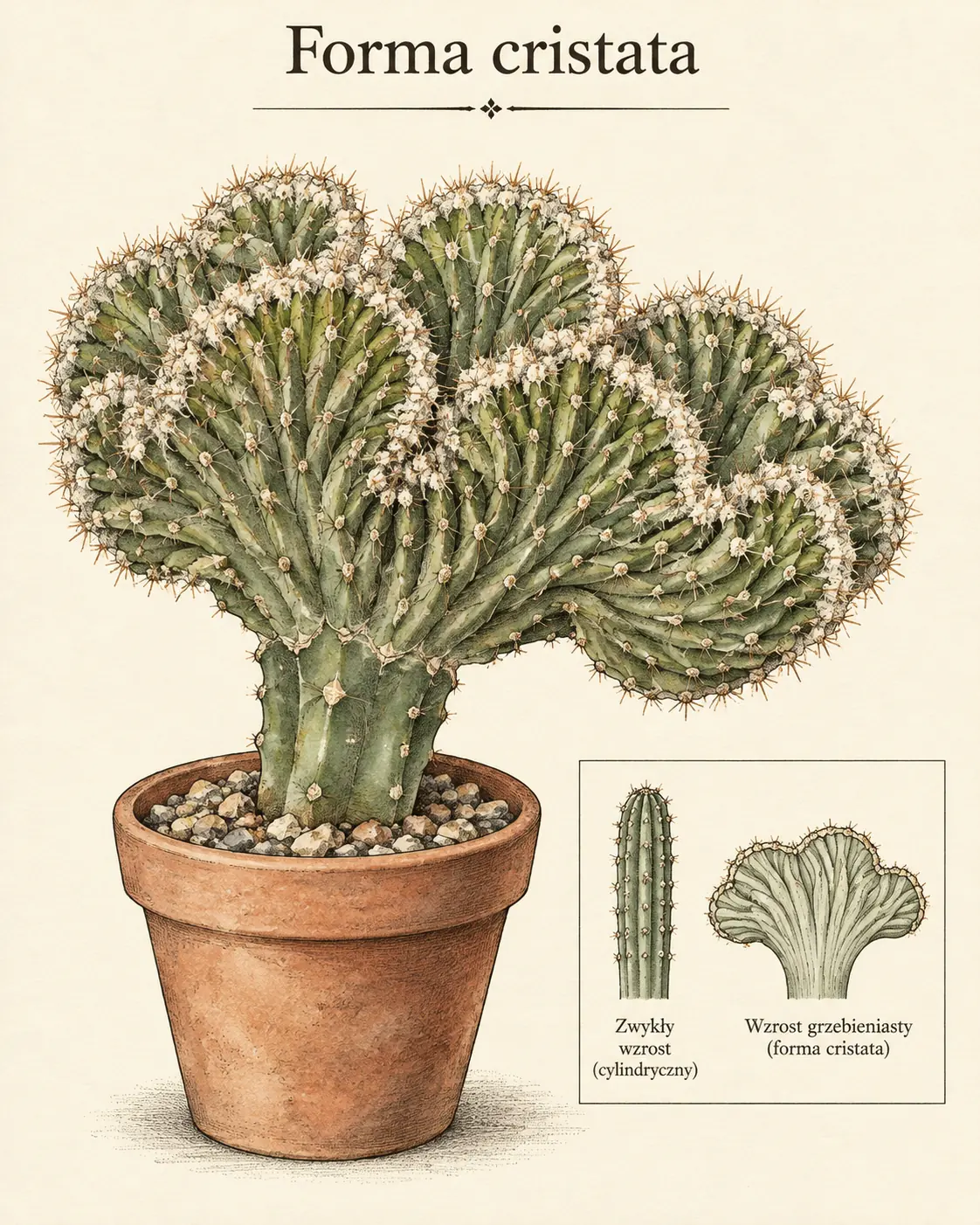
The monstrous forms used in the experiment are cultivated material with a particular appearance. The medium study describes their regeneration. The origin of growth abnormalities is a separate topic, discussed in the article on cristata and monstrous forms. [Lema-Rumińska et al. 2013]
MICROPROPAGATION AND ORGANOGENESIS OF ASTROPHYTUM ASTERIAS (ZUCC.) LEM. (CACTACEAE JUSS.), BLOSSFELDIA LILIPUTIANA WERDERM. AND STROMBOCACTUS DISCIFORMIS (DC.) BRITTON & ROSE
Ivannikov R., Lobova O., Ivannikova N., Krasnienkova I., MICROPROPAGATION AND ORGANOGENESIS OF ASTROPHYTUM ASTERIAS (ZUCC.) LEM. (CACTACEAE JUSS.), BLOSSFELDIA LILIPUTIANA WERDERM. AND STROMBOCACTUS DISCIFORMIS (DC.) BRITTON & ROSE, Journal of Microbiology, Biotechnology and Food Sciences, 2022, 11(5):e2201, doi: 10.55251/jmbfs.2201
The paper compares the regeneration of three small cacti from seedling explants. It discusses the effects of light and growth regulators on callus and shoot formation, followed by rooting, grafting and acclimatisation of the material.
Influence of Abscisic Acid and Sucrose on Somatic Embryogenesis in Cactus Copiapoa tenuissima Ritt. forma mostruosa
Lema-Rumińska J., Goncerzewicz K., Gabriel M., Influence of Abscisic Acid and Sucrose on Somatic Embryogenesis in Cactus Copiapoa tenuissima Ritt. forma mostruosa, The Scientific World Journal, 2013, 2013:513985, doi: 10.1155/2013/513985
The experiment concerns somatic embryogenesis in a horticultural monstrose form of Copiapoa humilis subsp. tenuissima, named in the title as C. tenuissima. It compares embryo development directly on tissue and through callus, and the effects of abscisic acid and sucrose concentrations.